Humanoid Robots Showcase Potential in Industrial Manufacturing and Social Services

Oct 21, 2025 By Noah Bell

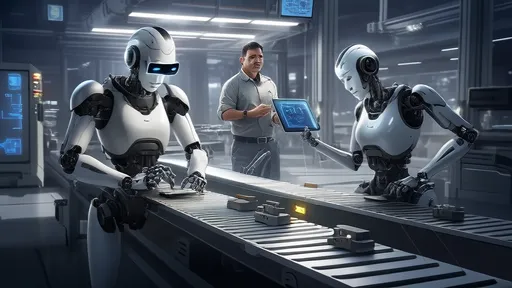
In the quiet hum of a Tokyo electronics factory, a pair of synthetic hands performs a delicate ballet, assembling circuitry with a precision that surpasses human capability. Across the globe, in a Stockholm retirement home, another humanoid form gently assists an elderly resident from their bed. These are not scenes from science fiction but snapshots of a present-day reality where humanoid robots are transitioning from laboratory prototypes to active participants in our industrial and social landscapes.


The journey of humanoid robotics has been one of fits and starts, punctuated by periods of intense hype and subsequent disillusionment. For decades, the field promised much but delivered little beyond carefully choreographed demonstrations. What has changed in recent years is not merely incremental improvement but a convergence of technologies that has finally enabled these machines to navigate the unpredictable chaos of human environments. The once-distant dream of robots working alongside us is materializing with tangible applications that signal a profound shift in how we approach labor, care, and daily life.


Industrial Evolution: Beyond the Assembly Line

Traditional industrial robots have long been confined to safety cages, performing repetitive tasks in highly structured environments. The emergence of humanoid robots represents a fundamental departure from this paradigm. Companies like Boston Dynamics with their Atlas robot and Tesla with their Optimus prototype are developing machines capable of integrating directly into existing workplaces without massive infrastructure changes.


The advantage of the human form factor becomes immediately apparent when considering the billions of dollars invested in creating environments designed for human proportions. Factories, warehouses, and construction sites are built around staircases, doorways, and tools sized for people. Humanoid robots can step into these spaces and utilize the same equipment, vehicles, and facilities without costly retrofitting. This compatibility offers a practical pathway to automation that doesn't require rebuilding the physical world from scratch.


At the BMW manufacturing plant in Spartanburg, South Carolina, humanoid robots are being tested for logistics tasks that fall between the capabilities of traditional automation and human workers. These robots can navigate between assembly stations, retrieve components, and perform quality checks in spaces too confined for larger automated systems. The implementation demonstrates a key insight: humanoids aren't necessarily replacing existing automation but filling the gaps where conventional robots struggle.


What makes these industrial applications particularly compelling is their learning capability. Unlike programmed industrial arms that execute identical movements thousands of times, humanoid robots increasingly employ artificial intelligence that allows them to adapt to variations in their environment. When a part is slightly out of position or a tool isn't exactly where expected, these robots can adjust their approach rather than halting operations and requiring human intervention.


The Social Dimension: Robots in Human Spaces

Perhaps more revolutionary than industrial applications is the gradual introduction of humanoid robots into social and service contexts. While industrial robots interact primarily with objects, social robots must navigate the far more complex realm of human interaction, with all its nuances, unpredictability, and emotional dimensions.


In healthcare settings, robots like Japan's ROBEAR are demonstrating remarkable potential. Designed specifically for lifting patients, ROBEAR combines the strength to safely move individuals with sensors and programming that ensure gentle, careful handling. This application addresses both practical needs—reducing physical strain on healthcare workers—and emotional ones, as the robot can perform repetitive lifting tasks consistently without fatigue or frustration.


Education represents another frontier where humanoid robots are making inroads. Research from Stanford University has shown that children with autism spectrum disorders often engage more readily with robot tutors than human instructors. The predictable, non-judgmental nature of robot interaction creates a safe learning environment where children can practice social skills without anxiety. Similarly, language learning applications have demonstrated that students feel less self-conscious making pronunciation mistakes with robot tutors than with human teachers.


The retail and hospitality industries are experimenting with humanoid robots as well. At Japan's Henn na Hotel, humanoid robots handle front desk operations, while in some Singaporean restaurants, robot servers deliver meals to tables. These implementations are as much about operational efficiency as they are about customer experience—the novelty of robot interaction itself becomes part of the service offering.


Technical Breakthroughs Driving Adoption

Several critical technological advances have converged to make current-generation humanoid robots viable where their predecessors failed. Motion control and balance algorithms have improved dramatically, enabling bipedal robots to navigate uneven surfaces and recover from disturbances that would have sent earlier models tumbling. The development of hydraulic actuators that mimic human muscle responsiveness has been particularly important for creating fluid, natural movement.


Computer vision represents another leap forward. Modern humanoid robots employ sophisticated sensor suites that combine LIDAR, stereo cameras, and depth sensors to create rich 3D maps of their surroundings in real time. This environmental awareness allows them to identify objects, avoid obstacles, and understand spatial relationships—capabilities essential for operating in dynamic human environments.


Perhaps the most significant advancement has been in the artificial intelligence that controls these machines. Early humanoid robots operated primarily through pre-programmed motions, while contemporary systems increasingly use machine learning to develop skills through practice and simulation. Tesla's approach to training their Optimus robot through neural networks and simulation represents a fundamental shift from programming behaviors to cultivating capabilities.


Battery technology and power management have also seen crucial improvements. The energy requirements for bipedal locomotion are substantial, and early humanoid robots suffered from limited operational time between charges. New battery chemistries and more efficient motor designs have extended operational periods to practical durations, with some current models able to work for several hours before requiring recharge.


Economic and Social Implications

The expanding capabilities of humanoid robots raise important questions about their economic impact. While fears of widespread job displacement dominate popular discourse, the reality appears more nuanced. In manufacturing, humanoid robots are increasingly being deployed not as replacements for human workers but as complements—handling tasks that are physically demanding, dangerous, or ergonomically challenging.


Demographic trends in many developed nations create a compelling case for robotic assistance. With aging populations and shrinking workforces in countries like Japan, Germany, and South Korea, humanoid robots may help maintain economic productivity and care infrastructure that would otherwise strain under demographic pressure. Rather than replacing workers, they may fill positions that would otherwise go unfilled.


The economic model for humanoid robotics is also evolving. While early research and development required massive investment, costs are declining as components become commoditized and manufacturing processes improve. Companies like Unitree Robotics have demonstrated that capable bipedal robots can be produced at increasingly accessible price points, suggesting that broader adoption across industries may be economically feasible sooner than previously anticipated.


Social acceptance remains a critical factor that will influence adoption rates. Cultural attitudes toward robots vary significantly—while Japanese society has generally embraced robotic assistance, other cultures exhibit more skepticism. Transparency about capabilities and limitations, along with clear demonstrations of benefit, will be essential for building public trust.


Ethical Considerations and Future Directions

As humanoid robots become more capable and widespread, they raise complex ethical questions that society must address. The creation of machines that mimic human appearance and behavior challenges our understanding of interaction and relationship. When robots care for the elderly or educate children, what responsibilities do manufacturers and operators bear for the psychological impact of these relationships?


Privacy concerns emerge naturally from robots equipped with extensive sensor arrays operating in homes and workplaces. The data collected about human behavior patterns, physical spaces, and daily routines represents a significant privacy consideration that requires thoughtful regulation and transparent handling.


Looking forward, the trajectory of humanoid robotics points toward increasing specialization. While general-purpose humanoid robots capture imagination, near-term commercial success may come from machines designed for specific domains—healthcare assistants, educational companions, or logistics specialists. This specialization allows for optimization around particular use cases while managing complexity.


Research institutions and companies are already looking beyond current capabilities. The next frontier involves robots that can not only perform physical tasks but understand and respond to human emotional states. Affective computing—technology that can recognize and respond to human emotions—could enable a new generation of robots capable of more nuanced social interaction.


The development of humanoid robotics represents one of the most ambitious technological undertakings of our era—an attempt to recreate, in synthetic form, the capabilities that evolution spent millions of years refining. The applications emerging in industrial and social contexts suggest we are approaching an inflection point where these machines transition from fascinating experiments to practical tools that augment human capability and address societal challenges.


What makes the current moment particularly significant is that after decades of speculation and false starts, humanoid robots are finally demonstrating real-world utility. They are moving components in factories, assisting caregivers in hospitals, and helping educators in classrooms. The promise is no longer theoretical but demonstrated in functioning applications that point toward a future where humans and humanoid robots collaborate in shared spaces, each bringing their unique strengths to complementary roles.



Recommend Posts
Tech

ASEAN Nations Urged to Improve Energy Infrastructure to Support AI Development

By /Oct 21, 2025

The humid air of Southeast Asia carries whispers of a technological revolution. In boardrooms from Jakarta to Hanoi, a consensus is emerging that the region's future economic competitiveness is inextricably linked to its capacity for Artificial Intelligence. Yet, beneath the glossy presentations and ambitious national AI strategies lies a more prosaic, yet utterly critical, challenge: the fundamental adequacy of the region's energy infrastructure. A growing chorus of analysts, industry leaders, and multilateral institutions is now sounding a clear warning. For ASEAN nations to truly harness the transformative power of AI, a parallel transformation of their power grids and generation capabilities is not just an option; it is an imperative.
Tech

2025 Global Top Ten Engineering Achievements Selection to Foster a Respectful Engineering Atmosphere"

By /Oct 21, 2025

The global engineering community stands at a pivotal moment as preparations intensify for the landmark 2025 Global Top Ten Engineering Achievements selection. This ambitious initiative, spearheaded by an international consortium of engineering academies and professional bodies, represents far more than a simple recognition program. It embodies a profound commitment to reshaping public perception of engineering's role in human progress.
Tech

High-Performance Carbon Fiber Composites Selected as One of the Top Ten Global Engineering Achievements by 2025

By Emily Johnson/Oct 21, 2025

The selection of high-performance carbon fiber composites as one of the 2025 Top Ten Global Engineering Achievements marks a watershed moment in materials science and industrial innovation. This recognition comes not merely as an academic accolade but as a testament to how this class of materials has fundamentally reshaped entire sectors, from aerospace to renewable energy, and set new paradigms for what is structurally and economically possible. The journey of carbon fiber composites, from specialized laboratory curiosities to mainstream engineering essentials, reflects decades of persistent research, refinement, and bold application.
Tech

South-to-North Water Diversion Middle Route Project Effectively Promotes Ecological Restoration of Rivers and Lakes Along the Route

By /Oct 21, 2025

The South-to-North Water Diversion Project's central route has emerged as an unexpected ecological champion, breathing new life into river systems and lake environments along its 1,432-kilometer journey from Danjiangkou Reservoir to Beijing and Tianjin. What began as an ambitious engineering solution to address northern China's chronic water shortages has evolved into a catalyst for environmental restoration, demonstrating how large-scale infrastructure can coexist with, and even enhance, natural ecosystems.
Tech

Pakistani Combat Verification Confirms J-10C Performance Surpasses French Rafale"

By /Oct 21, 2025

In the high-stakes arena of modern aerial warfare, performance claims are often shrouded in secrecy and national pride. However, recent operational data emerging from Pakistan's use of the Chengdu J-10C "Vigorous Dragon" fighter jet has provided compelling, real-world evidence that challenges established Western aerospace dominance. The aircraft, a cornerstone of the Pakistan Air Force's (PAF) modernization efforts, appears to be demonstrating capabilities that, in several key areas, surpass those of the highly-touted French Dassault Rafale.
Tech

Top 10 Global Engineering Achievements of 2025 with the Potential to Drive the Birth of New Industries

By /Oct 21, 2025

The year 2025 stands as a watershed moment in the chronicle of human technological advancement, a period where theoretical concepts began their tangible metamorphosis into world-altering realities. The global engineering community, a collective of brilliant minds operating across continents and disciplines, has delivered a portfolio of achievements that do not merely represent incremental progress. Instead, they are foundational technologies, the seeds from which entirely new industries are poised to sprout, reshaping our economies, societies, and very understanding of what is possible. These are not just feats of construction or computation; they are the blueprints for future civilizations.
Tech

World Federation of Engineering Organizations Conference Discusses Driving Green Economic Growth

By /Oct 21, 2025

The World Federation of Engineering Organizations (WFEO) convened its annual congress last week in a landmark gathering that brought together engineering leaders, policymakers, and industry experts from across the globe. Against the backdrop of escalating climate concerns and economic uncertainties, the conference focused squarely on engineering's pivotal role in driving green economic growth. The atmosphere throughout the five-day event was charged with both urgency and optimism, as delegates explored how engineering innovation could transform traditional economic models while addressing pressing environmental challenges.
Tech

EU Applied Artificial Intelligence" Strategy Covers Energy and Manufacturing Sectors

By /Oct 21, 2025

The European Union's strategic push into applied artificial intelligence has found particularly fertile ground in the energy and manufacturing sectors, two cornerstones of the continent's economic and environmental ambitions. This isn't merely a technological upgrade; it is a fundamental reimagining of industrial processes and energy systems. The strategy, woven into the fabric of broader initiatives like the Digital Decade and the Green Deal, positions AI not as a standalone tool but as an integrative force. It aims to create a symbiotic relationship where industrial advancement and sustainability goals reinforce each other, powered by intelligent algorithms and vast datasets.
Tech

Fon Der Leyen Announces AI First" Approach in All Key Areas

By /Oct 21, 2025

European Commission President Ursula von der Leyen has declared that artificial intelligence will become the driving philosophy across all critical sectors of the European Union's policy framework. In a sweeping announcement that signals a fundamental shift in Europe's technological trajectory, von der Leyen articulated a vision where AI ceases to be a standalone initiative and instead becomes the primary lens through which future challenges are addressed and opportunities are seized.
Tech

J-10C Fighter Jet Procurement Reflects Indonesia's Shift in Security Orientation

By /Oct 21, 2025

The recent announcement of Indonesia's potential acquisition of Chinese-made J-10C fighter jets represents more than just another arms purchase in Southeast Asia. This development signals a fundamental recalibration of Jakarta's security posture, reflecting deeper geopolitical currents sweeping across the Indo-Pacific region.
Tech

Antibody-Drug Conjugates Expand the Frontiers of Cancer Treatment

By /Oct 21, 2025

In the relentless pursuit of more effective cancer treatments, a class of therapeutics known as antibody-drug conjugates, or ADCs, has emerged as a transformative force. These sophisticated molecules, often described as "biological missiles" or "guided warheads," represent a paradigm shift in oncology. They are engineered with a singular, elegant purpose: to deliver potent cytotoxic agents directly to cancer cells while largely sparing healthy tissues. This targeted approach stands in stark contrast to traditional chemotherapy, which operates on a scorched-earth principle, attacking rapidly dividing cells throughout the body with devastating side effects. The journey of ADCs from a compelling theoretical concept to a cornerstone of modern oncology is a testament to decades of scientific perseverance and innovation.
Tech

Engineering Profession Pledges to Accelerate the Mutual Recognition of Engineering Qualifications

By /Oct 21, 2025

The global engineering community stands at a pivotal moment in its history, as professional bodies and international organizations unite behind an unprecedented commitment to accelerate the multilateral mutual recognition of engineering qualifications. This ambitious initiative represents a paradigm shift in how engineering competence is validated across borders, moving away from fragmented bilateral agreements toward a cohesive global framework.
Tech

Hubble Space Telescope Captures Information on Early Universe Galaxy Evolution

By /Oct 21, 2025

The faint whispers of cosmic dawn have found their most eloquent interpreter yet in the Euclid space telescope, an ambitious mission that is peeling back the layers of time to reveal the universe in its tumultuous youth. Unlike its predecessors, which offered fragmented glimpses, Euclid is conducting a grand, systematic survey, painting a comprehensive portrait of galactic evolution over the last ten billion years. Its latest data release is not merely an incremental update; it is a paradigm shift, offering a clarity and depth that is forcing astrophysicists to reconsider long-held assumptions about how the cosmos built its grandest structures.
Tech

High-performance Carbon Fiber Composites Known as the Black Gold" of Modern Industry

By Natalie Campbell/Oct 21, 2025

In the hushed laboratories of materials science, a quiet revolution has been unfolding—one that is reshaping the very fabric of modern industry. High-performance carbon fiber composites, often whispered about in engineering circles as the "Black Gold" of our era, represent not merely an advancement in materials technology but a fundamental shift in manufacturing philosophy. These materials, born from the marriage of carbon atoms woven into crystalline filaments thinner than human hair and embedded in polymer matrices, possess a paradoxical set of properties that once belonged solely to the realm of science fiction: the strength of steel at one-fifth the weight, the stiffness of titanium with superior fatigue resistance, and the corrosion resistance of platinum with unparalleled design flexibility. Their emergence signals a new chapter in human ingenuity, where the limitations of traditional materials are being systematically dismantled, one carbon strand at a time.
Tech

Top Ten Global Engineering Achievements Reflecting Systematic Innovation in Engineering Systems

By /Oct 21, 2025

As the world grapples with unprecedented challenges ranging from climate change to rapid urbanization, the role of engineering in shaping our collective future has never been more critical. The selection of the top ten global engineering achievements each year serves as a testament to humanity's relentless pursuit of progress through systematic innovation. These milestones are not isolated triumphs but interconnected manifestations of a broader paradigm shift in how we conceive, design, and implement solutions to complex global problems.
Tech

Promoting Action for International Engineering Technical Standards Interoperability in the Engineering Community

By /Oct 21, 2025

The global engineering landscape is undergoing a profound transformation, driven by the relentless pace of technological advancement and the increasing complexity of international projects. Against this backdrop, the engineering community has reached a critical consensus: the future of sustainable and efficient global development hinges on the establishment of robust interoperability among international engineering standards. This is not merely a technical aspiration but a strategic imperative for fostering collaboration, accelerating innovation, and ensuring the safety and reliability of infrastructure worldwide.
Tech

Humanoid Robots Showcase Potential in Industrial Manufacturing and Social Services

By Noah Bell/Oct 21, 2025

In the quiet hum of a Tokyo electronics factory, a pair of synthetic hands performs a delicate ballet, assembling circuitry with a precision that surpasses human capability. Across the globe, in a Stockholm retirement home, another humanoid form gently assists an elderly resident from their bed. These are not scenes from science fiction but snapshots of a present-day reality where humanoid robots are transitioning from laboratory prototypes to active participants in our industrial and social landscapes.
Tech

Comprehensive Application of Various Desertification Control Measures in the Taklamakan Desert Lock-Edge Project

By /Oct 21, 2025

Under the relentless sun of China's Xinjiang Uygur Autonomous Region, a monumental battle against desertification is unfolding along the fringes of the Taklamakan Desert, the world's second-largest shifting sand desert. The Taklamakan Desert Edge Stabilization Project represents one of the most ambitious ecological restoration endeavors on the planet, a complex and multi-faceted campaign to halt the desert's relentless advance. This is not a singular, silver-bullet solution but a sophisticated symphony of traditional wisdom and cutting-edge technology, woven together to create a living, breathing barrier against the sands.
Tech

Achieving Overall Goals through Technical Integration and System Optimization

By /Oct 21, 2025

The modern engineering landscape has evolved beyond the traditional compartmentalized approach to project execution. Where once individual components were developed in isolation and later assembled, today's most successful projects embrace a holistic methodology that prioritizes technical integration and system-wide optimization from the very beginning. This paradigm shift represents more than just a procedural change; it's a fundamental reimagining of how complex systems are conceived, developed, and implemented to achieve overarching objectives that individual components could never accomplish alone.