The South-to-North Water Diversion Project's central route has emerged as an unexpected ecological champion, breathing new life into river systems and lake environments along its 1,432-kilometer journey from Danjiangkou Reservoir to Beijing and Tianjin. What began as an ambitious engineering solution to address northern China's chronic water shortages has evolved into a catalyst for environmental restoration, demonstrating how large-scale infrastructure can coexist with, and even enhance, natural ecosystems.
The transformation began subtly, almost as an afterthought to the project's primary mission. As water started flowing through the canal system in December 2014, something remarkable happened in the dry riverbeds and depleted lakes that had suffered from decades of overuse and climate change. The consistent water supply created conditions for ecological recovery that hadn't been seen in generations. Local environmental agencies, initially focused on monitoring water quality, began documenting the return of vegetation, the stabilization of riverbanks, and the gradual reappearance of aquatic life in areas that had been biologically impoverished for years.
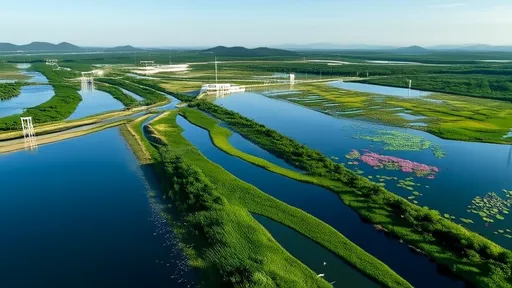
The revival of Baiyangdian Lake in Hebei Province stands as perhaps the most dramatic example of this ecological renaissance. Once known as the "Pearl of North China," this vast wetland ecosystem had been shrinking and deteriorating due to water scarcity and pollution. Before the diversion project, water levels had dropped alarmingly, threatening the lake's intricate network of channels, reed beds, and lotus ponds that support unique biodiversity. The arrival of consistent, high-quality water from the south has reversed this decline, with water levels rising by approximately 1.5 meters and water quality improving from below Grade V (unsuitable for any use) to Grade III (suitable for drinking with conventional treatment).
Environmental scientists monitoring Baiyangdian have documented the return of numerous bird species that had abandoned the area, including the rare Saunders's gull and the oriental stork. The lake's aquatic vegetation has recovered dramatically, with reed beds expanding by nearly 30 percent since 2015. This vegetative recovery has created habitats for fish populations to rebound, which in turn supports the return of predatory birds and improves the overall health of the aquatic ecosystem. Local fishermen, who had struggled with declining catches for years, report that their nets are filling again with species that had virtually disappeared from the lake.
Along the project's main canal, the ecological benefits extend far beyond the immediate water transfer infrastructure. The consistent water flow has recharged groundwater aquifers that had been dangerously depleted by decades of over-pumping for agriculture and urban use. In Henan Province, monitoring wells show groundwater levels rising by an average of 2.3 meters in areas adjacent to the canal, reversing a decline that had persisted since the 1980s. This groundwater recovery has secondary benefits for surrounding ecosystems, maintaining soil moisture that supports riparian vegetation and creating more stable conditions for terrestrial wildlife.
The project's designers incorporated ecological considerations from the beginning, though the scale of environmental benefits has exceeded expectations. The canal system includes numerous fish passages and wildlife corridors that allow animals to move across the landscape without being blocked by the water transfer infrastructure. These design features have proven particularly important for maintaining genetic diversity among isolated populations of species like the Chinese water deer and various amphibian populations that depend on connected wetland habitats.
In urban areas, the ecological impact manifests differently but no less significantly. Cities like Beijing and Tianjin have been able to reduce their dependence on local groundwater extraction, allowing aquifers to recover and land subsidence to slow. Before the project, Beijing was drawing groundwater at unsustainable rates, causing the water table to drop by approximately one meter per year. This over-extraction had caused significant land subsidence in some areas, damaging infrastructure and altering natural drainage patterns. With the diversion project supplying approximately 70 percent of Beijing's urban water needs, the city has been able to implement ambitious groundwater recharge programs that are gradually restoring the depleted aquifers.
The improved water security has also enabled local governments to dedicate more resources to ecological water allocations—intentionally releasing water into dry river channels specifically for environmental purposes. The Yongding River, which had become essentially dry along much of its course through Beijing, now flows again during critical periods of the year, supporting riverside vegetation and creating urban green spaces that benefit both wildlife and residents. Similar transformations have occurred along the Chaobai River and other watercourses that had been reduced to seasonal streams or completely dry channels.
Water quality management has been crucial to the project's ecological success. The central route benefits from drawing water from the Danjiangkou Reservoir on the Han River, which maintains excellent water quality due to extensive watershed protection measures upstream. This high-quality water serves as a diluting agent for more polluted local water bodies, improving overall water quality when mixed in receiving reservoirs and lakes. The constant movement of water through the canal system also helps prevent stagnation and algal blooms that can plague static water bodies in northern China's warm summers.
Perhaps the most significant ecological benefit lies in the project's role as a climate change adaptation measure. Northern China has become increasingly vulnerable to droughts and extreme weather events as climate patterns shift. The reliable water supply from the south provides a buffer against these climate stresses, maintaining minimum water levels in critical ecosystems during dry periods when they would otherwise be severely stressed. This climate resilience function may become increasingly important as climate models project more variable precipitation patterns and more frequent droughts in northern China in coming decades.
The project hasn't been without environmental trade-offs, of course. The diversion of water from the Han River basin has required careful management to avoid negative impacts on the source region. Environmental flow requirements have been established to ensure that sufficient water remains in the Han River to support its ecosystems, and extensive watershed protection programs have been implemented in the reservoir area to maintain water quality. These measures represent a comprehensive approach to water management that considers both the source and receiving regions.
Looking forward, the ecological benefits of the South-to-North Water Diversion Project's central route continue to evolve as the ecosystems respond to the improved water conditions. Scientists are studying how these restored habitats might serve as climate refuges for species moving northward as temperatures warm, potentially creating new biodiversity hotspots in regions that were previously too arid. The project demonstrates that large-scale water infrastructure, when carefully planned and managed, can deliver benefits beyond their primary purpose, creating opportunities for ecological restoration that might otherwise be impossible in water-scarce regions.
The success of the central route in supporting ecological recovery offers lessons for other regions facing similar water scarcity challenges. It shows that water transfer projects can be designed to work with natural systems rather than against them, creating multi-benefit infrastructure that addresses human water needs while simultaneously supporting environmental health. As climate change intensifies water stress in many parts of the world, this integrated approach to water management and ecological restoration may become increasingly relevant for other regions seeking to balance development with environmental sustainability.
While the primary purpose of bringing water to parched northern cities remains paramount, the ecological renaissance along the route has become an important secondary achievement—one that continues to unfold as ecosystems respond to the renewed availability of water. The return of birds to restored wetlands, the recovery of groundwater levels, and the regeneration of riverine ecosystems stand as testament to how thoughtfully engineered solutions can work in harmony with natural systems, creating benefits that extend far beyond their original design parameters.

By /Oct 21, 2025

By /Oct 21, 2025

By Emily Johnson/Oct 21, 2025
By /Oct 21, 2025

By /Oct 21, 2025

By /Oct 21, 2025

By /Oct 21, 2025

By /Oct 21, 2025

By /Oct 21, 2025

By /Oct 21, 2025

By /Oct 21, 2025

By /Oct 21, 2025

By /Oct 21, 2025

By Natalie Campbell/Oct 21, 2025

By /Oct 21, 2025

By /Oct 21, 2025

By Noah Bell/Oct 21, 2025
By /Oct 21, 2025

By /Oct 21, 2025