The recent announcement of Indonesia's potential acquisition of Chinese-made J-10C fighter jets represents more than just another arms purchase in Southeast Asia. This development signals a fundamental recalibration of Jakarta's security posture, reflecting deeper geopolitical currents sweeping across the Indo-Pacific region.
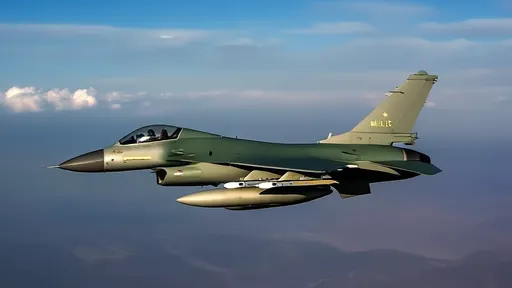
For decades, Indonesia maintained a relatively balanced approach to defense procurement, sourcing equipment from various suppliers while carefully avoiding overreliance on any single power. The country's air force currently operates a mix of American F-16s, Russian Sukhois, and older models from various European manufacturers. This diversification strategy served Indonesia well, allowing it to maintain strategic autonomy while building relationships with multiple global powers.
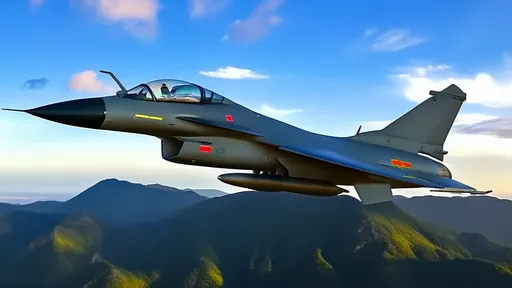
The potential shift toward Chinese advanced fighter aircraft marks a departure from this traditional approach. The J-10C, known as the "Vigorous Dragon" in Chinese service, represents China's most advanced single-engine multirole fighter available for export. With its advanced AESA radar, sophisticated avionics, and compatibility with China's latest air-to-air and air-to-ground munitions, the aircraft would significantly enhance Indonesia's air combat capabilities.
Strategic Calculations Behind the Move
Indonesia's interest in the J-10C emerges against a backdrop of evolving regional security dynamics. The country faces increasing pressure in the Natuna Sea, where Chinese coast guard and fishing vessels have repeatedly entered Indonesia's exclusive economic zone. While Jakarta has traditionally downplayed these incidents to maintain stable relations with Beijing, the persistent challenges to its maritime sovereignty have undoubtedly influenced defense planning.
The timing of this potential acquisition coincides with delays in Indonesia's participation in South Korea's KF-21 fighter program and uncertainties surrounding additional F-16 purchases from the United States. These factors have created an opening that China appears eager to exploit. More importantly, the J-10C offer likely comes with favorable financial terms that appeal to Indonesia's budget-conscious defense planners.
Broader Implications for Regional Security Architecture
Indonesia's potential embrace of Chinese military technology carries significant implications for ASEAN unity and the regional balance of power. As Southeast Asia's largest economy and only G20 member, Indonesia has traditionally played a leadership role within the association. A major Chinese arms purchase could influence other ASEAN members to reconsider their own defense procurement strategies, potentially weakening the region's collective resilience against external pressure.
The United States and its allies have watched Indonesia's defense procurement decisions closely. Washington has long viewed Indonesia as a key partner in maintaining a free and open Indo-Pacific. The prospect of Indonesia operating advanced Chinese fighters raises concerns about interoperability with Western partners and potential compromises in security cooperation. The United States might respond by offering enhanced defense cooperation or more attractive alternatives to prevent further Chinese inroads.
Economic and Technological Dimensions
Beyond immediate security considerations, the J-10C deal reflects growing economic interdependence between China and Indonesia. China has become Indonesia's largest trading partner and a major investor in infrastructure projects, including the high-speed railway connecting Jakarta with Bandung. Defense cooperation represents a natural extension of this deepening economic relationship.
The potential transfer of technology and joint production arrangements that often accompany Chinese arms sales could appeal to Indonesia's ambitions to develop its domestic defense industry. However, questions remain about the extent of technology transfer China would be willing to provide and whether it would genuinely support Indonesia's defense industrial base rather than creating long-term dependency.
Navigating Great Power Competition
Indonesia's potential J-10C acquisition demonstrates the delicate balancing act that middle powers must perform in an era of intensifying U.S.-China competition. While maintaining strong ties with the United States and its allies, Indonesia appears to be signaling that it cannot afford to alienate China either. This hedging strategy reflects pragmatic recognition of China's growing influence and capabilities in the region.
The decision also highlights Indonesia's commitment to an independent foreign policy, a cornerstone of its diplomatic tradition since the Bandung Conference of 1955. By diversifying its sources of advanced military equipment, Indonesia seeks to preserve its strategic autonomy while addressing immediate defense needs. However, this approach becomes increasingly challenging as the technological gap between American and Chinese systems narrows and as geopolitical pressures intensify.
Operational and Logistical Considerations
Integrating the J-10C into Indonesia's air force would present both opportunities and challenges. The aircraft's capabilities would represent a significant upgrade over some of Indonesia's older fighters, particularly in air superiority missions. However, operating Chinese aircraft alongside American and Russian platforms would create logistical complexities in maintenance, training, and spare parts supply chains.
The Indonesian air force would need to develop entirely new maintenance infrastructure and training programs for the J-10C, potentially straining limited defense budgets. Furthermore, questions about the aircraft's combat performance in real-world scenarios remain unanswered, as Chinese-made fighters have seen limited combat experience compared to their Western counterparts.
Future Trajectory and Regional Impact
Should Indonesia proceed with the J-10C purchase, it could accelerate similar moves by other Southeast Asian nations. Malaysia and Thailand have also shown interest in Chinese military equipment, though thus far primarily in less sensitive categories than advanced fighter aircraft. Indonesia's decision could establish a precedent that makes Chinese arms purchases more politically acceptable throughout the region.
The long-term impact on regional security dynamics will depend on how this potential acquisition fits into Indonesia's broader strategic posture. If it represents a temporary measure to address capability gaps while maintaining diverse defense relationships, the regional impact may be limited. However, if it signals the beginning of a broader strategic reorientation toward China, it could fundamentally alter the geopolitical landscape of Southeast Asia.
As Indonesia continues to weigh its options, the international community watches closely. The ultimate decision regarding the J-10C will reveal much about Indonesia's assessment of regional threats, its economic priorities, and its vision for Southeast Asia's strategic future. In the delicate dance of great power politics, middle powers like Indonesia face increasingly complex choices that balance immediate security needs against long-term strategic interests.
The J-10C decision thus represents more than a simple equipment purchase—it serves as a barometer of shifting alignments in the Indo-Pacific. As China's military modernization continues and its defense exports become more sophisticated, the choices made by important regional players like Indonesia will shape the strategic environment for decades to come. The coming months will reveal whether Jakarta's potential embrace of Chinese fighter aircraft marks a temporary adjustment or a fundamental reorientation of Indonesia's place in the regional order.

By /Oct 21, 2025

By /Oct 21, 2025
By Emily Johnson/Oct 21, 2025

By /Oct 21, 2025
By /Oct 21, 2025

By /Oct 21, 2025

By /Oct 21, 2025

By /Oct 21, 2025

By /Oct 21, 2025
By /Oct 21, 2025

By /Oct 21, 2025

By /Oct 21, 2025

By /Oct 21, 2025

By Natalie Campbell/Oct 21, 2025

By /Oct 21, 2025

By /Oct 21, 2025

By Noah Bell/Oct 21, 2025

By /Oct 21, 2025

By /Oct 21, 2025