The data center landscape is undergoing a seismic shift, driven by an insatiable demand for computational power, lower latency, and more efficient resource utilization. At the heart of this transformation lies a new class of hardware: the SmartNIC, also known as a Data Processing Unit (DPU) or Infrastructure Processing Unit (IPU). These are not mere network interface cards; they are powerful, specialized computers-on-a-card that are fundamentally rearchitecting the very foundations of cloud computing data centers.
For decades, the central processing unit (CPU) has been the undisputed brain of the server, tasked with running both application logic and the vast overhead of infrastructure services like networking, storage, and security. This model, however, is hitting a wall. As cloud-native applications become more distributed and data-intensive, the overhead consumed by this "datacenter tax" can cripple performance, stealing precious cycles away from revenue-generating applications. The CPU, a generalist by design, is becoming a bottleneck, struggling to manage the colossal data flows of modern workloads efficiently.
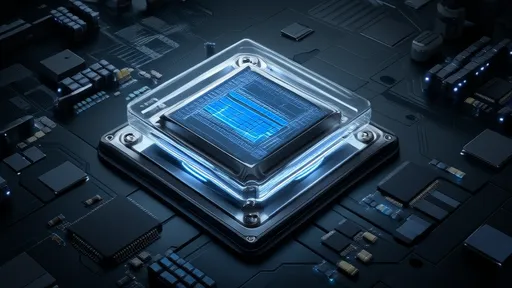
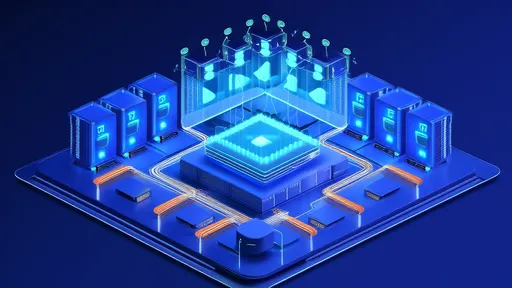
Enter the SmartNIC. These devices are engineered to offload, accelerate, and isolate the entire data center infrastructure stack from the host CPU. Equipped with multi-core processors (often Arm-based), specialized accelerators for cryptography and compression, and powerful networking engines, they function as autonomous subsystem controllers. By moving functions like virtual switching, storage virtualization, firewalling, and encryption directly onto the NIC, the host server's CPUs are liberated. This decoupling is not a simple optimization; it is a complete architectural paradigm shift, enabling a new era of disaggregated, composable, and secure infrastructure.
The most immediate and profound impact of SmartNIC adoption is the dramatic improvement in server performance and efficiency. By relieving the CPU of its infrastructure duties, every server in the fleet can dedicate its full computational power to running customer applications and business logic. This translates directly into higher transaction throughput, lower latency for end-users, and the ability to support more virtual machines or containers per physical host. For cloud providers, this efficiency gain is a powerful economic driver, allowing them to achieve a significantly better total cost of ownership (TCO) and either offer more competitive pricing or host more workloads on the same physical hardware.
Beyond raw performance, SmartNICs are the key enablers of a truly secure, zero-trust architecture in the cloud. In traditional models, the hypervisor and host OS are part of the trusted compute base. A compromise at this level could potentially expose all tenant data on the server. SmartNICs introduce a hardware-rooted trust boundary. They can isolate the management and control plane from the tenant application plane entirely. Security functions like micro-segmentation, deep packet inspection, and encryption can be executed directly on the SmartNIC, which remains under the sole control of the cloud provider. This means that even if a tenant's virtual machine is breached, the attacker cannot manipulate the network or storage policies or access data from other tenants on the same host, as that infrastructure is physically and logically separated on the SmartNIC.
The architectural philosophy ushered in by the DPU/IPU is one of disaggregation and composability. We are moving away from the notion of a server as a monolithic, self-contained unit of compute, storage, and networking. Instead, the SmartNIC acts as the central orchestrator and gateway for its host server, connecting it to a pool of disaggregated resources—be it remote memory, specialized compute accelerators (GPUs, FPGAs), or distributed storage systems. The SmartNIC manages the data flow to these resources with extreme low latency and high bandwidth, making them appear local to the application. This paves the way for highly flexible, efficient, and sustainable data centers where resources can be allocated and scaled independently based on real-time demand, eliminating the waste of stranded resources in fixed-configuration servers.
For cloud service providers, this architectural revolution is transformative. It allows them to offer new classes of service with guaranteed performance and enhanced security. They can deploy "bare-metal" cloud instances that retain the performance of dedicated hardware but with the elasticity and security automation of a virtualized cloud, all managed by the SmartNIC. The automation of complex networking and storage tasks also simplifies operations, reduces human error, and enables infrastructure to be managed as code at a massive scale. The data center becomes more programmable, resilient, and adaptive.
Of course, this transition is not without its challenges. Integrating SmartNICs requires a rethinking of software stacks, development of new drivers and APIs, and a shift in operational practices for DevOps and NetOps teams. There is also a need for new skill sets to program and manage these heterogeneous systems. However, the industry momentum is undeniable. Major silicon vendors, server OEMs, and every leading hyperscaler are investing heavily and deploying SmartNICs at scale. The ecosystem of software, from operating systems to management frameworks, is rapidly evolving to embrace this new architectural model.
In conclusion, the SmartNIC is far more than an advanced network card. It is the cornerstone of the next-generation cloud data center architecture. By offloading and accelerating infrastructure functions, it unleashes CPU performance, hardens security to previously unattainable levels, and unlocks the potential of fully disaggregated infrastructure. We are witnessing the beginning of a new compute era, one where the server is redefined, and the data center becomes a truly dynamic, efficient, and secure fabric of composable resources. The future of the cloud will be built upon the intelligent, powerful foundation of the DPU and IPU.

By /Aug 26, 2025
By /Aug 26, 2025

By /Aug 26, 2025
By /Aug 26, 2025

By /Aug 26, 2025

By /Aug 26, 2025
By /Aug 26, 2025
By /Aug 26, 2025

By /Aug 26, 2025

By /Aug 26, 2025
By /Aug 26, 2025
By /Aug 26, 2025

By /Aug 26, 2025
By /Aug 26, 2025
By /Aug 26, 2025
By /Aug 26, 2025

By /Aug 26, 2025

By /Aug 26, 2025

By /Aug 26, 2025

By /Aug 26, 2025