Integration of Satellite Internet (Starlink, etc.) with Traditional Telecommunication Networks

Aug 26, 2025 By

The telecommunications landscape is undergoing a profound transformation, driven by the convergence of two historically distinct domains: terrestrial networks and non-terrestrial, or satellite, networks. For decades, these systems operated in parallel, serving different markets and use cases with minimal interaction. However, the advent of advanced Low Earth Orbit (LEO) satellite constellations, most notably SpaceX's Starlink, is shattering this long-standing paradigm. We are now witnessing the early stages of a deep and complex integration, a fusion that promises to create a seamless, resilient, and truly global network fabric, fundamentally altering how humanity connects.

The impetus for this convergence stems from the limitations inherent in each system when operating in isolation. Traditional terrestrial networks, comprising fiber optics, cell towers, and undersea cables, provide high-bandwidth, low-latency connectivity to densely populated areas. Their economic model, however, makes expansion into remote, rural, and geographically challenging regions prohibitively expensive. Conversely, satellite communication has always been the solution for these hard-to-reach places, but legacy Geostationary (GEO) systems, orbiting at 36,000 kilometers, are plagued by high latency and limited capacity, making them unsuitable for modern, interactive applications like video conferencing, online gaming, or real-time financial trading.

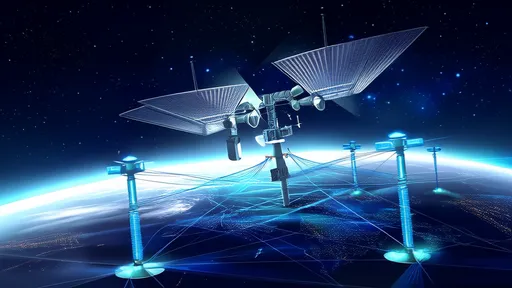
The breakthrough came with the commercialization of LEO constellations. By placing thousands of small satellites at altitudes between 500 and 1,200 kilometers, companies like SpaceX, OneWeb, and Amazon's Project Kuiper have dramatically reduced latency to levels comparable to terrestrial networks—often under 50 milliseconds. Furthermore, the use of phased-array antennas and inter-satellite laser links allows for dynamic beam-forming and high-speed data routing in space, creating a mesh network in the sky with immense capacity. This technological leap means satellite internet is no longer just a last-resort option; it is now a high-performance contender.

The true magic, however, lies not in competition but in collaboration. The fusion is happening on multiple technical and operational levels. For mobile network operators (MNOs), the value proposition is immense. Instead of building and maintaining expensive cell towers in extremely low-density areas, they can now partner with satellite providers to offer direct-to-cell services. Smartphones, with minimal hardware modifications, can connect directly to satellites, providing basic texting, calling, and emergency services in dead zones. This transforms a telecom's coverage map from a patchwork of served and unserved areas into a blanket of continuous service, a powerful competitive and safety advantage.

Beyond consumer cellular service, the integration is critical for the Internet of Things (IoT) and machine-to-machine (M2M) communication. Industries such as agriculture, shipping, logistics, and environmental monitoring rely on sensors deployed across vast, unconnected territories. Terrestrial networks cannot economically reach a sensor in the middle of a field or on a container ship crossing the ocean. Satellite networks can. A fused ecosystem allows data from these remote sensors to be uplinked to a satellite, which can then beam it down to a ground station connected to the global fiber backbone, creating a continuous data flow from the most remote asset to the cloud data center.

Perhaps the most significant technical challenge and area of innovation is in the seamless handoff between networks. The vision is for a device to automatically and unconsciously switch between Wi-Fi, 5G, and satellite links based on availability, performance, and cost, all while maintaining a persistent connection. This requires sophisticated network management software, new protocols, and deep integration at the core network level. Standards bodies like the 3rd Generation Partnership Project (3GPP) are already working on incorporating non-terrestrial networks into the 5G and future 6G standards, ensuring that this hybrid model is baked into the architecture of next-generation connectivity from the ground up.

From a strategic and macroeconomic perspective, this fusion is a geopolitical imperative. Governments are increasingly recognizing resilient communication infrastructure as a matter of national security. A hybrid terrestrial-satellite network is inherently more robust. Natural disasters, such as hurricanes or earthquakes, can devastate ground-based infrastructure, cutting off communication precisely when it is needed most. Satellite networks, especially proliferated LEO constellations, are far more resilient to such regional disasters, providing a critical lifeline for first responders and affected communities. This redundancy ensures that a nation's digital heartbeat continues unabated.

Furthermore, this convergence is a powerful tool for bridging the digital divide. Nearly three billion people remain unconnected to the internet, largely due to a lack of economic incentive for terrestrial build-out. Satellite-terrestrial fusion offers a viable path to global digital inclusion. A community can be served by a local 4G/5G micro-cell or Wi-Fi hotspot, which is then backhauled to the internet via a Starlink terminal, rather than a physical fiber line. This model drastically reduces the cost and time required to bring high-speed internet to a village, school, or clinic in a developing region, unlocking educational, economic, and healthcare opportunities on an unprecedented scale.

Of course, this path is not without its obstacles. Regulatory harmonization across different countries and regions is a complex hurdle. Spectrum allocation—the radio frequencies used by both cell towers and satellites—must be carefully managed to avoid harmful interference. There are also significant questions regarding space sustainability, as the growing number of satellites increases the risk of collisions and contributes to concerns about orbital debris and astronomical observation. The industry must proactively address these challenges through international cooperation and responsible practices.

In conclusion, the fusion of satellite internet constellations like Starlink with traditional telecommunications is far more than a niche technological trend. It represents a fundamental restructuring of global connectivity architecture. We are moving away from a model of isolated networks and towards a single, unified, and intelligent hybrid system. This system will be defined by its ubiquity, resilience, and adaptability, capable of delivering the right type of connection at the right time, anywhere on Earth. It promises to erase the final blank spots on the connectivity map, empower new industries, and ensure that our increasingly digital world remains online, no matter what. The future of connectivity is not in the sky or on the ground; it is in the seamless integration of both.
Recommend Posts
IT

Greening 5G Networks: Enhancing Energy Efficiency with KPIs

By /Aug 26, 2025

The global rollout of 5G networks represents one of the most significant technological shifts of our generation, promising unprecedented speed, connectivity, and the foundation for a fully realized Internet of Things. However, this massive infrastructure expansion comes with a substantial energy cost, raising critical questions about its environmental impact. As data traffic is projected to grow exponentially, the telecommunications industry faces a pressing challenge: how to deliver these advanced services while simultaneously reducing its carbon footprint and operating expenses. The pursuit of a greener 5G network is no longer a niche concern but a central pillar of corporate strategy and environmental responsibility.
IT

Near-Memory Computing Technology to Alleviate Data Transfer Bottlenecks

By /Aug 26, 2025

The relentless pursuit of computational speed has long been a defining feature of the technology industry. For decades, this pursuit was largely satisfied by the predictable cadence of Moore's Law, which delivered ever-increasing numbers of transistors on a single chip, allowing processors to execute instructions at breathtaking speeds. However, a fundamental and increasingly critical imbalance has emerged, casting a long shadow over these advancements. The core of the problem is not the speed of computation itself, but the agonizingly slow and power-hungry process of moving the data needed for those computations. This is the infamous "data movement bottleneck," a wall that traditional computing architectures are repeatedly crashing into.
IT

Cyber Digital Twin: Simulating and Optimizing Physical Networks in the Virtual World

By /Aug 26, 2025

In the rapidly evolving landscape of digital transformation, one concept is steadily gaining traction for its profound implications across industries: network digital twins. This technology, which creates virtual replicas of physical networks, is not merely a buzzword but a pivotal innovation reshaping how organizations design, manage, and optimize complex systems. By mirroring real-world networks in a dynamic digital environment, digital twins enable unprecedented levels of simulation, analysis, and prediction, offering a gateway to enhanced efficiency, reliability, and innovation.
IT

In-Memory Computing" Architecture Breaks the "Memory Wall"

By /Aug 26, 2025

The relentless pursuit of computational efficiency has long been haunted by a formidable bottleneck known as the "memory wall." This term describes the critical performance limitation that arises from the physical separation between the central processing unit (CPU) and main memory in conventional von Neumann architectures. Data must constantly shuttle back and forth across this divide, a process that consumes immense amounts of time and energy. As processors have become exponentially faster, this data movement has emerged as the dominant constraint, throttling system performance and inflating power consumption, particularly for data-intensive workloads like artificial intelligence and big data analytics.
IT

A Comprehensive Guide to Designing, Deploying, and Maintaining Liquid-Cooled Data Centers

By /Aug 26, 2025

The hum of cooling fans has long been the defining soundtrack of data centers worldwide. For decades, air cooling has been the default, the comfortable and well-understood method for managing the immense thermal output of computing equipment. But as computational demands skyrocket—driven by artificial intelligence, high-performance computing, and ever-denser server architectures—the limitations of moving air have become starkly apparent. We are rapidly approaching a thermal ceiling, a point where air can no longer carry away heat efficiently enough. In this new era, the industry is turning to a more fundamental and powerful medium: liquid. The transition to liquid cooling is not merely an incremental upgrade; it represents a fundamental paradigm shift in data center design, deployment, and operational philosophy.
IT

Sustainable Data Centers: Practices of Waste Heat Recovery and Renewable Energy Utilization

By /Aug 26, 2025

As the digital age accelerates, data centers have become the backbone of modern infrastructure, powering everything from cloud computing to artificial intelligence. However, this growth comes with a significant environmental cost, primarily due to their massive energy consumption. In response, the industry is increasingly focusing on sustainable practices, with two key strategies emerging: waste heat recovery and the integration of renewable energy sources. These approaches not only reduce the carbon footprint of data centers but also enhance operational efficiency and economic viability.
IT

Integration of Satellite Internet (Starlink, etc.) with Traditional Telecommunication Networks

By /Aug 26, 2025

The telecommunications landscape is undergoing a profound transformation, driven by the convergence of two historically distinct domains: terrestrial networks and non-terrestrial, or satellite, networks. For decades, these systems operated in parallel, serving different markets and use cases with minimal interaction. However, the advent of advanced Low Earth Orbit (LEO) satellite constellations, most notably SpaceX's Starlink, is shattering this long-standing paradigm. We are now witnessing the early stages of a deep and complex integration, a fusion that promises to create a seamless, resilient, and truly global network fabric, fundamentally altering how humanity connects.
IT

How Wi-Fi 7's MLO (Multi-Link Operation) Technology Completely Transforms the Wireless Experience

By /Aug 26, 2025

The wireless landscape stands on the brink of its most profound transformation in over a decade, ushered in by the arrival of Wi-Fi 7 and its cornerstone innovation: Multi-Link Operation, or MLO. This is not merely an incremental speed boost or a slight extension of range. MLO represents a fundamental architectural shift in how Wi-Fi devices communicate, promising to dismantle long-standing limitations and finally deliver on the full, seamless potential of wireless connectivity. For years, users have accepted the trade-offs—the dropped video call when moving between rooms, the laggy game session when others stream Netflix, the frustrating wait for large files to transfer. Wi-Fi 7 with MLO is engineered to make these compromises a relic of the past.
IT

New Breakthrough in Optical Communication Technology: Single-Wave Rate Approaches 1.6Tb/s

By /Aug 26, 2025

The telecommunications landscape is undergoing a seismic shift, driven by an insatiable global demand for data. In laboratories and R&D centers worldwide, the race to push the boundaries of data transmission speed has reached a new, staggering milestone: the successful demonstration of single-carrier data transmission at 1.6 Terabits per second (Tb/s). This is not merely an incremental step; it is a quantum leap that promises to redefine the very backbone of our digital infrastructure, from hyper-scale data centers to the transoceanic cables that connect continents.
IT

Terahertz Communications: A Potential Key Technology for Future 6G

By /Aug 26, 2025

The race toward 6G is already underway, and while it may seem like a distant future given the ongoing global rollout of 5G, researchers and industry leaders are intensely exploring the technologies that will define the next generation of wireless communication. Among the most promising and revolutionary candidates is terahertz (THz) communication, operating in the frequency range of 0.1 to 10 THz. This largely untapped region of the electromagnetic spectrum holds the key to unlocking unprecedented data rates and capacities, potentially revolutionizing how we connect, compute, and interact with the digital world.
IT

Recent Advances in 3D Chip Stacking and Advanced Packaging Technologies

By /Aug 26, 2025

The relentless pursuit of miniaturization and performance in the semiconductor industry has entered a new, three-dimensional phase. For decades, the guiding principle was Moore's Law, the observation that the number of transistors on a microchip doubles about every two years, achieved primarily by shrinking transistor sizes on a flat, two-dimensional plane of silicon. However, as we approach the physical and economic limits of this scaling, the industry's focus has dramatically shifted upwards. The new frontier is not just making things smaller, but stacking them. 3D chip stacking and advanced packaging technologies have moved from niche applications to the central strategy for continuing the pace of innovation, promising to redefine the very architecture of computing for the AI era and beyond.
IT

Quantum Computing Hardware Roadmap: Which Will Take the Lead - Superconducting, Ion Trap, or Photonic?

By /Aug 26, 2025

The race for quantum computing supremacy has entered a fascinating phase, with three distinct hardware approaches—superconducting qubits, trapped ions, and photonic systems—vying for dominance. Each path carries its own philosophical and engineering challenges, reflecting divergent schools of thought about how to tame the quantum world. Unlike classical computing’s relatively linear evolution, the quantum hardware landscape resembles a multidimensional chessboard where progress in one area often reshapes the entire competitive field.
IT

Convergence of Software-Defined Wide Area Network (SD-WAN) and Secure Access Service Edge (SASE)

By /Aug 26, 2025

The convergence of Software-Defined Wide Area Networking (SD-WAN) and Secure Access Service Edge (SASE) represents a pivotal shift in how enterprises architect their network and security infrastructures. As digital transformation accelerates and remote work becomes ubiquitous, organizations are grappling with the limitations of traditional network models. The legacy approach of backhauling traffic to centralized data centers for security inspection is no longer tenable in an era where cloud applications and distributed users demand low-latency, secure access from anywhere. This has set the stage for the natural marriage of SD-WAN's agile connectivity and SASE's comprehensive security framework, creating a unified cloud-native architecture that is reshaping the future of enterprise networking.
IT

Ecosystem Progress of RISC-V in Server and High-Performance Computing Fields

By /Aug 26, 2025

The RISC-V architecture, once perceived as a niche player in the embedded and IoT spaces, is now making significant inroads into the demanding realms of servers and high-performance computing (HPC). This progression from the periphery to the potential mainstream of computational heavy-lifting is not a sudden leap but the result of a meticulously growing, albeit complex, ecosystem. The narrative is no longer about if RISC-V can compete in these markets, but how and when it will establish a formidable presence.
IT

Deterministic Networking in Industrial Automation Applications

By /Aug 26, 2025

Industrial automation stands at the cusp of a transformative era, driven by the relentless demand for higher efficiency, precision, and reliability. In environments where a millisecond delay can cascade into significant operational failures or safety hazards, the quality of network communication is not merely a technical detail—it is the backbone of entire production ecosystems. Traditional best-effort IP networks, while revolutionary in general computing and internet services, fall critically short in these high-stakes scenarios. Their inherent unpredictability in latency, jitter, and packet loss creates a fundamental barrier to achieving the seamless, synchronized control required by modern industrial applications such as motion control, robotic assembly lines, and process automation.
IT

How DPU/IPU Reconstructs Cloud Computing Data Center Architecture

By /Aug 26, 2025

The data center landscape is undergoing a seismic shift, driven by an insatiable demand for computational power, lower latency, and more efficient resource utilization. At the heart of this transformation lies a new class of hardware: the SmartNIC, also known as a Data Processing Unit (DPU) or Infrastructure Processing Unit (IPU). These are not mere network interface cards; they are powerful, specialized computers-on-a-card that are fundamentally rearchitecting the very foundations of cloud computing data centers.
IT

Technology Selection between Cellular Networks (4G/5G) and IoT Private Networks (LoRa, NB-IoT)

By /Aug 26, 2025

In the rapidly evolving landscape of wireless communication, the choice between cellular networks like 4G and 5G and specialized Internet of Things (IoT) networks such as LoRa (Long Range) and NB-IoT (Narrowband IoT) has become a critical decision for businesses and developers. Each technology offers distinct advantages and trade-offs, making the selection process highly dependent on specific application requirements, including range, bandwidth, power consumption, and cost. Understanding the nuances of these technologies is essential for deploying efficient, scalable, and future-proof IoT solutions.
IT

The Commercialization Process and Challenges of Silicon Photonics

By /Aug 26, 2025

The commercialization of silicon photonics represents one of the most significant technological shifts in the semiconductor and telecommunications industries in recent decades. Born from the marriage of silicon semiconductor fabrication and photonic principles, this technology promises to address the growing demands for faster, more efficient data transmission in an increasingly connected world. While the theoretical groundwork was laid as far back as the 1980s, it is only in the last ten to fifteen years that we have witnessed a concerted push to transition these devices from research labs to high-volume manufacturing facilities. The journey, however, is far from straightforward, presenting a complex tapestry of engineering triumphs and persistent, formidable challenges.
IT

Optimizing Distributed Storage with Next-Generation NVMe-over-Fabric Technology

By /Aug 26, 2025

The storage industry stands at the precipice of a transformative shift, driven by the relentless demand for higher performance, lower latency, and greater scalability in data centers. At the heart of this evolution lies NVMe-over-Fabrics (NVMe-oF), a technology that is fundamentally rearchitecting how we think about and deploy distributed storage systems. By extending the revolutionary benefits of Non-Volatile Memory Express (NVMe) across network fabrics, it promises to eliminate the bottlenecks that have long plagued traditional storage area networks (SANs) and network-attached storage (NAS) architectures.
IT

Platform Engineering: Enhancing Developer Experience and Efficiency

By /Aug 26, 2025

In the ever-evolving landscape of software development, a transformative shift is underway as organizations increasingly embrace platform engineering to redefine how development teams operate. This discipline, focused on building and maintaining internal developer platforms (IDPs), is rapidly becoming a cornerstone of modern tech strategy. By abstracting infrastructure complexities and providing self-service capabilities, platform engineering empowers developers to focus on what they do best—writing code and delivering business value—rather than wrestling with deployment pipelines and cloud configurations.